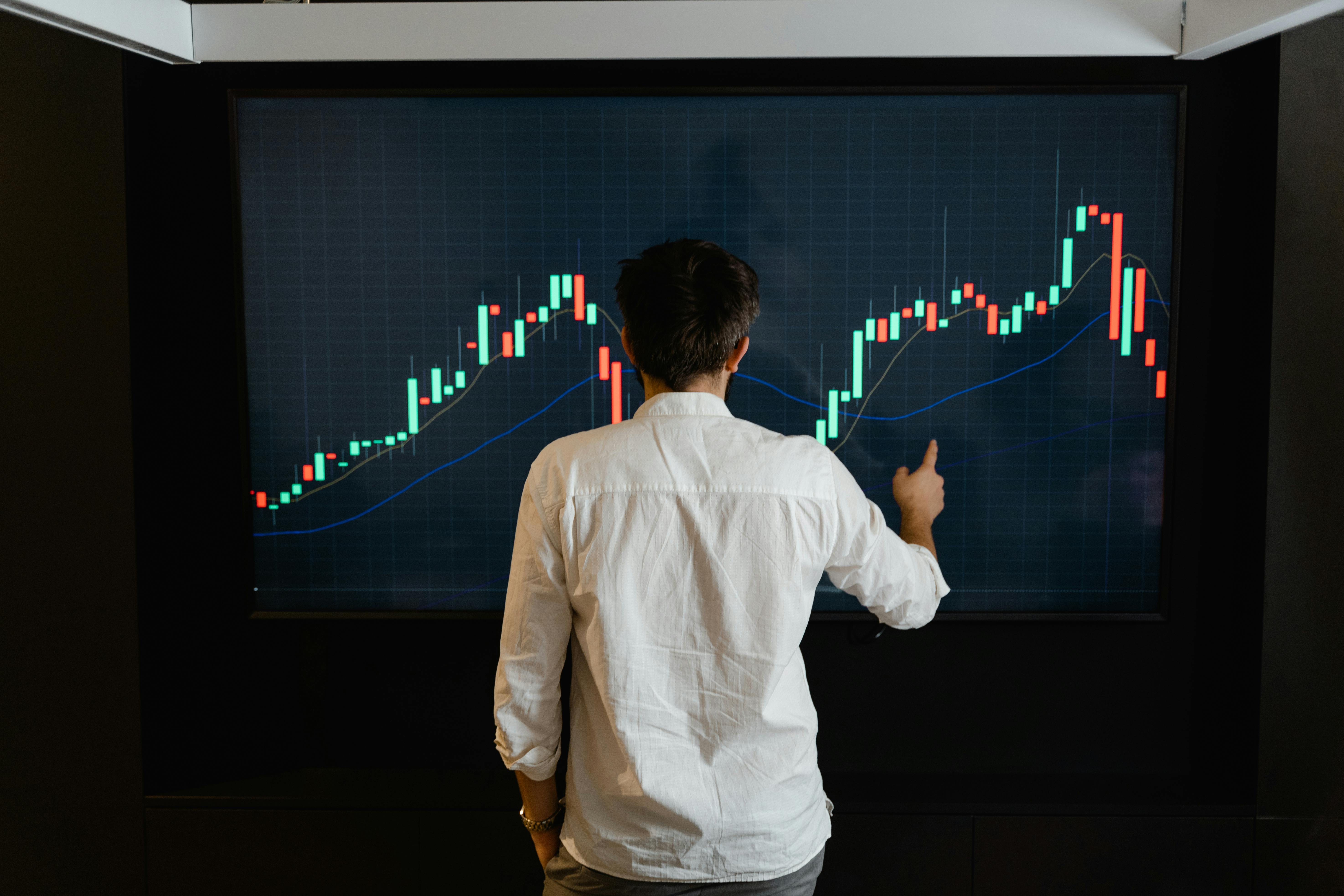
Market volatility is rarely out of the headlines for long. Share prices move sharply. Economic data surprises. Political events unsettle confidence. Portfolio valuations shift, sometimes in a matter of hours.
Investors today have more visibility than ever before. Platforms provide real time access. Mobile apps display live valuations. Financial commentary runs continuously. Transparency has improved significantly. Decision making has not always improved alongside it.
One of the most common and costly investing mistakes is reacting to short term market volatility rather than remaining anchored to a long term financial plan.
Understanding what market volatility truly represents is the first step towards avoiding that mistake.
What Is Market Volatility?
Market volatility refers to the rapid and sometimes unpredictable fluctuations in the prices of financial assets such as shares, bonds and investment funds over short periods of time.
When asset prices rise and fall sharply within days or weeks, volatility is described as high. When movements are steadier and less pronounced, volatility is lower.
Higher volatility generally reflects increased uncertainty and perceived risk in financial markets. That uncertainty may stem from economic data, geopolitical developments or shifts in investor confidence.
Volatility is not an anomaly. It is a structural feature of financial markets. Equity markets, bond markets and property markets have always moved in cycles. Periods of expansion are followed by periods of contraction. Over longer time horizons, growth has historically outweighed decline, but the journey has never been linear.
Markets have never moved in a straight line. Short term fluctuation is the price paid for long term opportunity.
What Causes Market Volatility?
Market volatility is driven by a combination of economic, political and behavioural factors. Understanding these drivers provides perspective when headlines feel unsettling.
Common causes include:
-
Inflation data and changes in interest rates
-
Economic growth figures and employment data
-
Corporate earnings announcements
-
Geopolitical events and global conflicts
-
Central bank policy decisions
-
Shifts in investor sentiment
-
Technological and algorithmic trading activity
Inflation surprises can alter expectations for interest rates. Central bank decisions can influence borrowing costs and business investment. Corporate earnings can reshape confidence in specific sectors. Political instability can create uncertainty around trade, regulation and growth.
Investor sentiment often amplifies these factors. Markets respond not only to data itself, but to how that data compares with expectations.
Periods of heightened uncertainty tend to produce higher volatility. Periods of stability tend to produce lower volatility. Neither condition lasts indefinitely.
How Is Market Volatility Measured?
Volatility is commonly measured using statistical tools such as standard deviation, which assesses how far returns deviate from their average over time.
Market based indicators are also used. The VIX index, often referred to as the “fear gauge”, measures expected volatility in the US equity market based on options pricing. Rising VIX levels typically indicate increased investor anxiety and expectations of sharper price swings.
Measurement tools provide insight into intensity. They do not predict direction. Elevated volatility does not inherently signal long term decline, just as low volatility does not guarantee stability.
For long term investors, volatility metrics are informative but rarely decisive. Planning discipline matters more than short term readings.
The Real Risk: Reacting to Short Term Movements
Modern technology has altered how investors experience volatility. In previous decades, many pension investors received a single annual valuation. Twelve months of movement appeared as one consolidated figure.
Today, daily valuation access can create the illusion that action is required.
Short term market declines can trigger an instinct to protect capital by selling. Acting on that instinct frequently locks in losses. Markets often recover unexpectedly and rapidly. Missing even a small number of the strongest recovery days can materially reduce long term returns.
Attempting to time entry and exit points is rarely successful over sustained periods. Professional fund managers with vast analytical resources struggle to do so consistently. Individual investors face even greater behavioural challenges.
Time in the market has historically been more powerful than timing the market. Compounding returns require capital to remain invested. Growth builds on growth. Recovery is captured by those who stay the course.
Short term noise can feel urgent. Long term outcomes are shaped by patience.
The Psychological Cost of Constant Monitoring
Frequent portfolio checking introduces another layer of risk, one that is rarely quantified but deeply felt.
Behavioural finance research demonstrates that investors experience the pain of losses more intensely than the satisfaction of gains. This principle, known as loss aversion, becomes amplified when valuations are reviewed daily.
Waking up and immediately checking portfolio values can create unnecessary stress. Minor fluctuations appear significant when isolated from broader context. Emotional responses can override rational planning.
Transparency is valuable. Obsessive monitoring is rarely productive.
A structured financial plan is designed to absorb volatility. Reviewing progress within planned intervals provides perspective. Reacting impulsively to daily movement rarely enhances long term outcomes.
Diversification: Managing Volatility, Not Avoiding It
Diversification remains one of the most effective tools for managing market volatility.
Spreading investments across different asset classes, geographic regions and investment strategies reduces reliance on any single outcome. Equities behave differently from bonds. Domestic markets do not always move in line with global markets. Sustainable strategies may respond differently from broader core allocations.
Diversification does not eliminate volatility. It moderates concentration risk and smooths the investment journey over time.
At Becketts, investment management operates alongside financial planning. Our in house investment team works in alignment with advisers to ensure portfolios reflect each client’s objectives and risk tolerance. Risk appetite is defined carefully at the outset. Volatility feels far less unsettling when it has been anticipated and incorporated into the design of the plan.
Volatility and Long Term Financial Planning
Financial independence, retirement income, business exit planning and estate strategy unfold over decades. Short term market fluctuations are measured against those long term objectives.
Cash flow forecasting allows clients to visualise how different market scenarios affect future sustainability. Contingency modelling demonstrates that temporary declines rarely derail a well constructed plan.
Volatility represents uncertainty in the short term. Planning creates clarity in the long term.
Higher volatility often signals heightened uncertainty. Uncertainty can feel uncomfortable. Discomfort does not automatically imply danger. Markets have historically recovered from recessions, crises and geopolitical tensions. Timing has varied. Direction over extended periods has remained resilient.
A disciplined financial roadmap absorbs short term variability while remaining focused on enduring objectives.
Volatility Is the Price of Progress
Investment returns are not delivered without variability. The potential for long term growth exists precisely because markets incorporate uncertainty and risk.
Attempting to eliminate volatility entirely often leads to excessive conservatism. Excessive conservatism can erode purchasing power and undermine long term financial independence.
The objective is not to avoid movement. The objective is to manage risk intelligently, diversify thoughtfully and remain aligned to clearly defined goals.
Your goals do not need to wobble when markets do.
Volatility will continue. Economic cycles will evolve. Political events will unfold. Transparency will increase further. A well designed financial plan, built on independence, discipline and clarity, provides stability through each phase.
Perspective is powerful. Education strengthens conviction. Structure reduces emotional decision making.
If recent market volatility has prompted questions about your portfolio or long term strategy, a considered conversation can restore clarity. Short term fluctuations rarely define outcomes. Long term planning usually does.